01
State of the Field
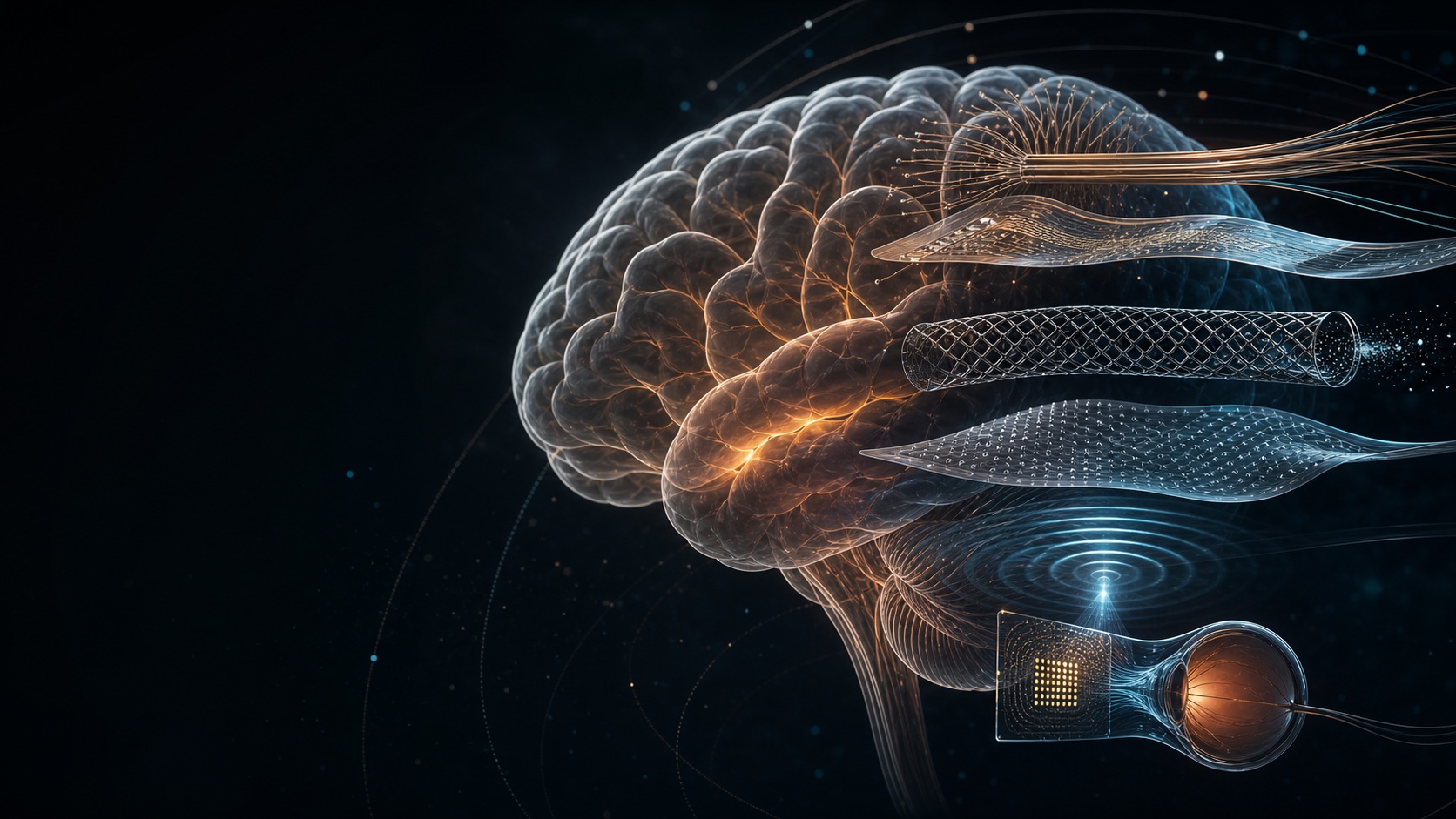
Neurotechnology does three things: it reads signals from the nervous system, stimulates it, or links the two in a feedback loop.
The short version: neurotech already works in people. Users can move cursors, type, reduce tremor, and recover pieces of vision[1][2][3].
What is missing is a system people can rely on for years. The hard problems now are durability, calibration, surgery, reimbursement, maintenance, and trust.
02
How Neurotech Actually Works
Most systems can be understood in three verbs: read, write, and close the loop.
03
What Matters
04
Interface Modalities
Getting closer to neurons usually gives a cleaner signal. It also means more surgery, more tissue contact, and more ways for the body to push back.
| Approach | What it touches | Main strength | Main weakness | Representative names |
|---|
05
Field Landscape
Compare companies by interface path, first job, and evidence. Compare interface routes, then open a company for the sources behind it. These routes are categories, not a universal risk or quality ranking.
Two approaches, side by side
Compare the actual product.
Compare a named system and intended use. A company can have several programs at different stages.
Who else matters
The field is bigger than startups
Startups get the headlines. Device makers, labs, hospitals, regulators, and payers decide what can actually reach patients.
06
Where Neurotech Works First
The best first products solve one painful problem and make the result easy to measure.
07
What the Evidence Shows
The paper trail is strongest in closed-loop therapy and communication, and thinnest in broad consumer thought decoding.
08
Timeline
09
What Is Still Hard
10
What Comes Next
11
What Success Looks Like
A neural interface should be judged by what it gives the user—not by what it can extract.
12
Read the evidence, not the headline.
A useful way to evaluate a neurotechnology claim: name the device, the population, the task, and the length of follow-up.
What did the regulator actually authorize?
A Breakthrough designation can accelerate interaction and review; it does not itself authorize marketing. A 510(k) evaluates substantial equivalence for a particular intended use. An investigational authorization concerns a study. Read the exact device and indication rather than treating every FDA-related announcement as a product approval. FDA: Breakthrough program ↗ · FDA: 510(k) ↗ · FDA: IDE ↗
Did the person gain useful function?
Ask what the user could do before and after. A cursor metric, a classification score, and independent communication answer different questions. Look for task completion, errors, assistance required, and outcomes that matter outside the demonstration.
How much human support was hidden?
Our evaluation lens: count setup, calibration, technician time, training, troubleshooting, and caregiver involvement. A strong signal in a supervised session does not by itself establish an independent home-use product.
Did the result last?
Separate the best session from performance across weeks or months. Look for withdrawals, adverse events, signal drift, re-training, repairs, and outcomes after the study team steps back. A durable interface is also a support and maintenance system.
Is a commercial product also a proven therapy?
Not necessarily. A company may sell EEG research hardware or consumer software without a therapeutic indication. For example, OpenBCI explicitly distinguishes Cyton from a medical diagnostic device. Compare the claimed use and evidence, not merely whether a checkout page exists. Cyton product scope ↗
How should I use this guide?
This is a curated field guide, not an exhaustive registry or clinical recommendation. The original 16-company research snapshot dates to July 2026. Eight new dossiers and the Nudge primary-source update were reviewed on September 8, 2026. Company documents describe products and claims; questions about deployment and proof are editorial analysis. Regulatory scope and availability vary by country and indication.
13
A working vocabulary.
14
Sources
The company pages, papers, and reporting used in this guide.